How to Turn a YouTube Video into a Blog Post
A 15-minute video contains roughly 2,000–2,500 spoken words — a full article's worth of material you've already created. Repurposing it as a blog post gives the same ideas a second audience and gives search engines text they can actually index. Here's a workflow that takes under an hour.
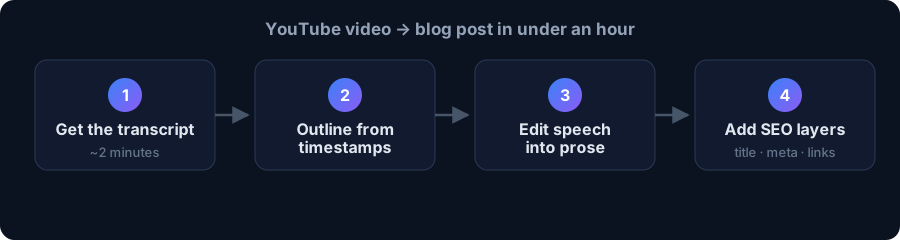
Step 1 — Get the transcript (2 minutes)
Paste the video URL into the free transcript generator and download the TXT. You'll get the full timestamped text of everything said in the video. (Working from someone else's video? Quote sparingly and link the source — republishing another creator's full content isn't repurposing, it's copying.)
Step 2 — Build the skeleton from timestamps (10 minutes)
Spoken content already has structure — the timestamps reveal it. Skim the transcript and mark where the topic shifts; each shift is a candidate H2 heading. A tutorial video usually maps 1:1 to a how-to post: intro → steps → result. A discussion video maps to key-takeaway sections.
Step 3 — Edit speech into prose (30 minutes)
Spoken and written language are different. Go section by section and:
- Cut filler ("so, um, like I said, you know") and repeated phrases.
- Merge fragmented sentences; speech runs long, prose should be tight.
- Replace "as you can see here" (pointing at the screen) with actual descriptions or screenshots.
- Convert spoken lists into real bullet lists and numbered steps.
An LLM can do a solid first pass at this — paste a section of the transcript and ask it to "rewrite this spoken transcript as blog prose, keeping all facts" — then review by hand. The transcript's accuracy matters here, which is why starting from the caption text beats re-listening and retyping.
Step 4 — Add the blog-only layers (10 minutes)
- Title & meta description targeting how people search the topic (often different from the video's clickbait title).
- Intro paragraph that states the payoff — don't transcribe your video intro, write a real lede.
- Embed the video near the top; the post and video reinforce each other's watch time and rankings.
- Internal links to your related posts, and a call to action at the end.
Bonus: one video, many assets
The same transcript also seeds a newsletter issue, a Twitter/X thread (pull the 5 best lines), LinkedIn posts, and show notes. Creators publishing in multiple languages can translate the transcript first and repeat the workflow per language.
Why this helps SEO
Write the article for readers first — Google's own helpful content guidance is explicit that pages made primarily for people perform best. Google can't rank what it can't read. Video content is nearly invisible to search except through its title and description; a transcript-based article makes every point in the video indexable, rankable, and quotable — and earns links a raw video rarely gets.